
 September 14, 2026
The Role of AI in Development: From Slower Sprints to Smarter Software
18
Jun
 Admin
Admin Technology
 0 Comments
The Role of AI in Development: From Slower Sprints to Smarter Software
Not too long ago, a development team's biggest bottleneck was simply the number of hours in a day. More features meant hiring more developers. More bugs meant more QA hours. More complexity meant slower releases. That equation has been quietly breaking down for a while now, and AI is the reason why.
Development teams today are shipping faster, debugging smarter, and building products that actually feel designed around their users, not by working longer hours, but by working differently. Here's what that looks like in practice, why it's happening now, and where things are headed next.
The Problem Development Teams Have Lived With for Years
Ask any engineering manager what keeps them up at night and you'll hear some version of the same three complaints.
Bugs surface late, usually after release, when they're expensive and embarrassing to fix. Manual testing eats up hours that should go toward building new features. And despite every sprint ritual and planning tool out there, products still ship with a gap between what users actually need and what got built.
None of this is new. Development teams have wrestled with these exact problems for decades. What's new is that AI is finally giving teams real tools to close that gap, not by replacing developers, but by clearing out the friction that's always slowed them down.
What AI Actually Changes for Development Teams
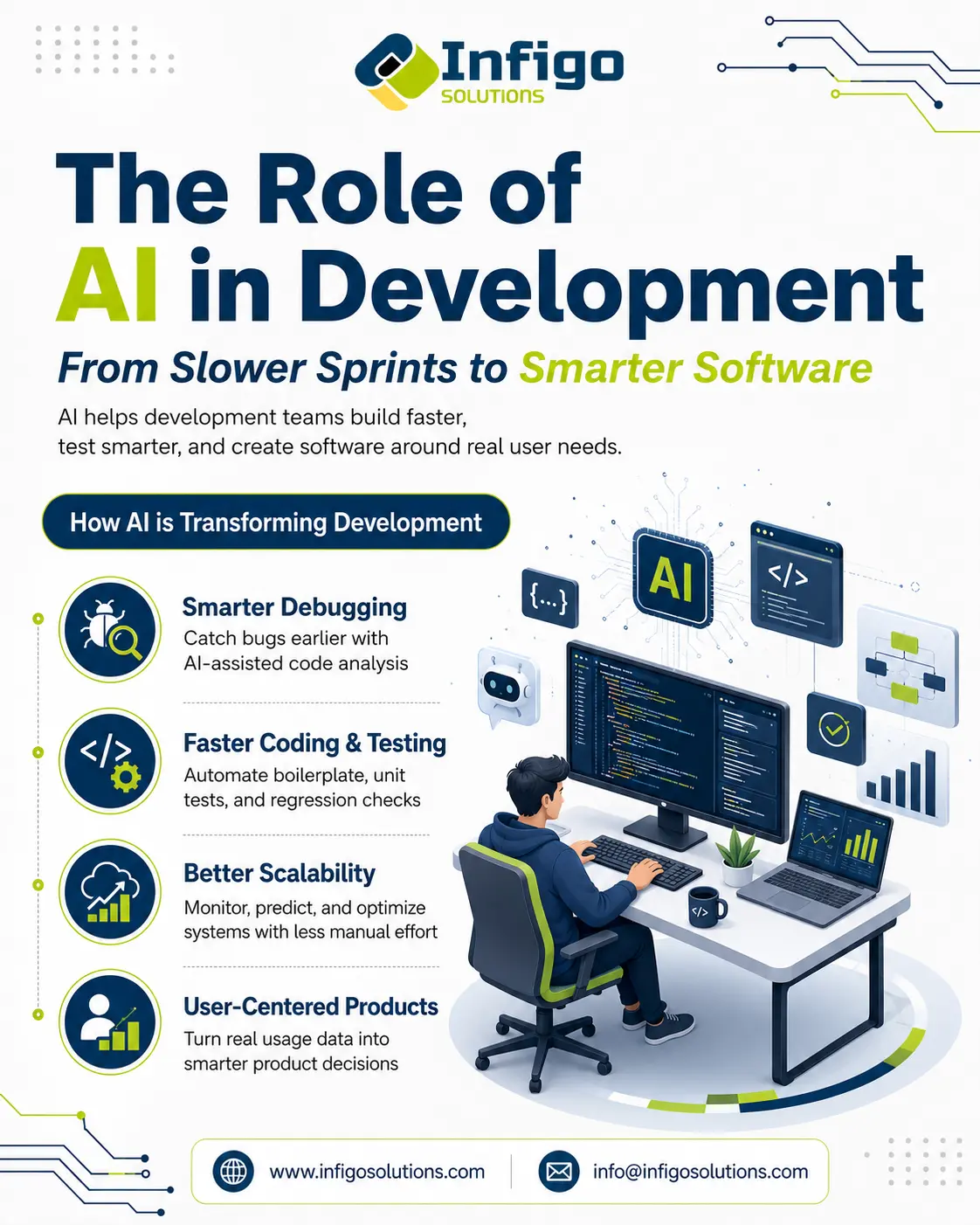
Smarter Debugging That Catches Problems Before Users Do
Traditional debugging is reactive. Something breaks, a user reports it, and a developer spends hours retracing steps just to find the cause. AI-powered tools flip that sequence around. Static analysis models trained on millions of codebases can flag potential bugs, security gaps, and performance issues while the code is still being written, not three sprints later.
In practice, this means a developer gets a warning about a possible null reference or an inefficient query the moment they type it, instead of finding out when a customer complains. Teams using AI-assisted code review are catching a noticeably higher share of bugs before they ever touch production.
Faster Coding and Testing, Without Cutting Corners
AI coding assistants have moved well past basic autocomplete. They generate boilerplate, suggest entire functions based on context, write unit tests automatically, and help refactor messy code into something cleaner. For developers, this doesn't mean less thinking. It means less time on repetitive grunt work and more time on the architecture and logic that actually needs a human mind.
Testing has followed the same pattern. AI-driven testing tools can generate test cases based on how an application is actually used, catch edge cases a human tester might overlook, and run regression tests automatically every time new code lands. Software gets tested more thoroughly, in a fraction of the time it used to take.
This holds whether a team is building with React, React Native, or any other modern framework — the tools change, but the architectural judgment behind them stays a human skill.
Better Scalability Without Bigger Teams
Scaling a product used to mean scaling the team behind it. More users meant more support tickets, more infrastructure headaches, more manual monitoring. AI-powered systems now absorb a huge chunk of that load on their own, predictive scaling that anticipates traffic spikes before they hit, automated monitoring that flags issues without anyone staring at a dashboard at 2 AM.
A five-person development team today can realistically support a product that would have needed fifteen people just a few years back. This isn't theoretical. It's already happening across startups and established companies alike.
Products Built Around What Users Actually Want
One of the most underrated uses of AI in development isn't technical at all, it's on the product side. AI tools can sift through user behavior data, session recordings, and support tickets at a scale no human team could ever manually process, surfacing patterns about what's confusing people, what features sit untouched, and where the real friction lives in a product.
Instead of guessing what to build next based on whoever's loudest in the room, teams can ground their decisions in actual usage data. The products that come out of that process tend to feel less like a checklist of features and more like something that was genuinely built around how people use it.
What This Looks Like Day to Day
Picture a team building a fintech app. Before AI entered the workflow, a typical sprint went something like this: a developer writes a payment processing function, QA runs a manual test cycle days later, a code review catches a few issues even further down the line, and deployment occasionally surfaces an edge case in production that nobody saw coming.
With AI woven into the process, that same sprint looks different. The developer writes the function while an AI assistant flags edge cases worth handling, like what happens if a payment request times out mid-transaction. Tests generate themselves based on the function's logic. Static analysis catches a potential race condition before the code is even committed. By the time a human reviewer opens the pull request, most of the obvious issues are already gone.
The developer isn't doing less work. They're spending more of their time on the parts of the job that actually need their expertise, and less on the repetitive stuff that used to swallow their day.
Where This Is Heading
The current wave of AI development tools is already powerful, but the direction of travel points toward something even more woven into how teams work. Expect AI to shift from being a tool developers reach for into something closer to a collaborative teammate, one that weighs in on architecture decisions, flags technical debt before it piles up, and learns continuously from a specific codebase instead of generic training data.
Teams that lean into this early, building real workflows around AI instead of treating it as a novelty, are putting themselves in a position to ship better products faster than competitors still doing things the old way. This isn't about replacing developers. It's about giving them tools that finally match the complexity of what they're being asked to build.
Frequently Asked Questions
Will AI replace software developers?
No. AI takes repetitive, time-consuming work off a developer's plate, boilerplate coding, basic testing, early bug detection, but it doesn't replace the judgment, creativity, and architectural thinking that developers bring to the table. Most engineering leaders see it as a force multiplier for their teams, not a substitute for them.
How does AI improve debugging specifically?
AI-powered static analysis tools scan code as it's written, spotting potential bugs, security vulnerabilities, and performance issues based on patterns learned from analyzing massive amounts of code. Catching problems this early in the cycle is significantly cheaper and faster than fixing them after release.
Is AI development tooling only useful for large engineering teams?
Not at all. Small teams and startups often see the biggest relative benefit, since AI tools let a handful of developers do what used to require a much larger team. That's part of why adoption has been just as strong among early-stage companies as it has among large enterprises.
What's the learning curve for adopting AI tools in a development workflow?
Most modern AI coding assistants and testing tools integrate directly into existing IDEs and CI/CD pipelines. Teams typically see real productivity gains within the first few weeks, since the adjustment is more about new habits than learning an entirely new system.
How does AI help build more user-centric products?
AI tools can process user behavior data, session recordings, and support interactions at a scale no manual analysis could match, surfacing exactly where users struggle and what they actually need. That shifts product decisions from guesswork to something grounded in real data, which tends to produce products that genuinely reflect what users want.
What It Comes Down To
AI in development isn't some trend on the horizon. It's already reshaping how good software gets built, from the first line of code all the way to the moment it reaches real users. The teams pulling ahead right now aren't necessarily the ones with the biggest headcount. They're the ones using AI to work smarter, catch problems before they become expensive, and build things that actually reflect what their users need.
If you're curious about how AI could fit into your own development process, the team at Infigo Solutions has helped companies bring intelligent tooling into real, working pipelines. Reach out at info@infigosolutions.com and let's talk through what that could look like for you.
We Are Awesome.
A business consulting agency is involved in the planning, implementation, and education of businesses. We work directly.


.webp "LinkedIn")
Leave a Message
Recent Posts
 September 11, 2026
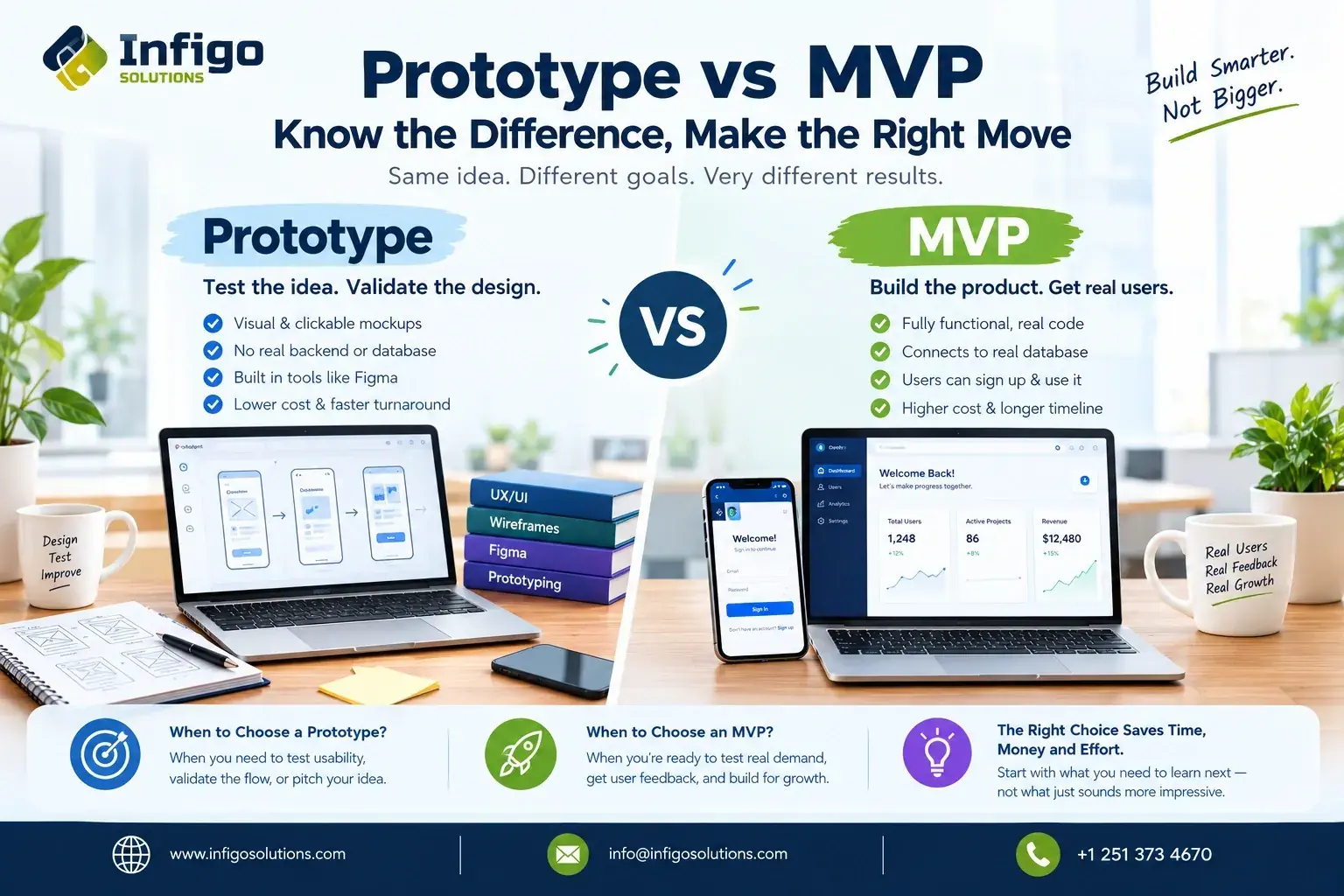
Prototype vs MVP: What's the Difference and Which Do You Need First?
 September 9, 2026
Comments
No comments yet. Be the first to comment!