 September 14, 2026
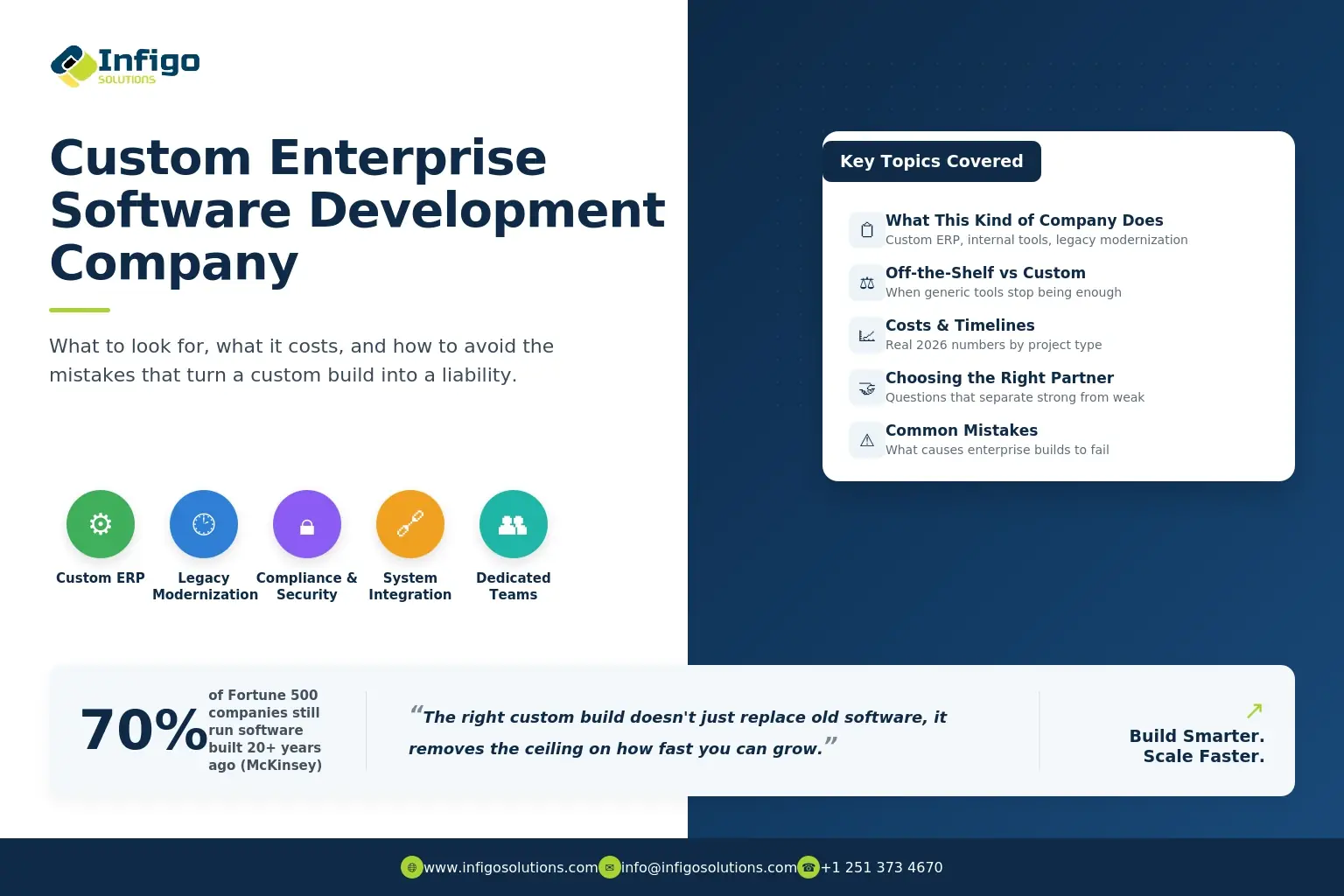
Custom Enterprise Software Development Company: What to Look For and What It Costs
14
Sep
 Max
Max Enterprise
 0 Comments
Custom Enterprise Software Development Company: What to Look For and What It Costs
Large organizations rarely fail at enterprise software because the technology was unavailable. They fail because they picked the wrong build, the wrong partner, or the wrong scope. A custom enterprise software development company exists to solve a specific problem: off-the-shelf enterprise tools cover maybe 70 percent of what a large organization actually needs, and the remaining 30 percent, the part tied to how your business actually operates, is where generic software quietly costs more than it saves.
This guide covers what working with an enterprise software development partner actually involves, what separates a strong company from a weak one, and what realistic costs and timelines look like in 2026.
What This Kind of Company Actually Does
A firm in this space builds software specifically around how a large organization operates, rather than asking the organization to adapt its processes to fit a generic product built for thousands of different companies. That distinction matters more at enterprise scale than anywhere else, because enterprise workflows are rarely simple, and the cost of forcing a mismatched process onto a rigid off-the-shelf tool compounds across every department that touches it.
This work typically spans a few categories: custom ERP systems, internal tools that connect otherwise siloed departments, legacy system modernization, and integrations that let dozens of existing systems actually talk to each other. According to McKinsey's research on legacy infrastructure, roughly 70 percent of the software running Fortune 500 companies was built more than 20 years ago, which is exactly the kind of technical debt an enterprise software development company is often brought in to address.
Off-the-Shelf Enterprise Software vs a Custom Build
| Factor | Off-the-Shelf Enterprise Software | Custom Enterprise Software |
| Fit to existing workflows | Requires the organization to adapt | Built around actual processes |
| Integration with legacy systems | Often limited or costly to extend | Designed for your specific stack |
| Licensing cost at scale | Grows with seats and modules | One-time build, no per-seat scaling |
| Ownership | Vendor controls the roadmap | Full ownership of code and IP |
| Time to launch | Fast, days to weeks | Months, depending on scope |
| Long-term flexibility | Limited to what the vendor supports | Modified as the business changes |
Neither option is automatically better. Off-the-shelf tools make sense for functions that are genuinely standard across companies, like basic email or expense tracking. Going custom earns its cost specifically where the workflow, the compliance requirement, or the integration need is unique to how your organization runs.
Signs Your Organization Needs a Custom Build
A few patterns show up consistently in enterprises that have outgrown generic software:
- Multiple systems don't talk to each other. Teams are manually exporting and re-entering data between tools that should already be connected, which introduces errors and wastes hours every week.
- Legacy systems are becoming a liability. Aging infrastructure that nobody fully understands anymore creates both security risk and a growing dependency on a shrinking pool of people who know how it works.
- Compliance requirements are industry-specific. Healthcare, finance, and other regulated industries often need data handling and audit trails that generic platforms were never built to support.
- Scaling costs are becoming unpredictable. Per-seat licensing that made sense at 50 employees becomes a significant, unpredictable cost at 500.
- The organization has outgrown a spreadsheet-and-email workflow that used to work but now creates bottlenecks across departments.
What This Actually Costs
Enterprise software pricing varies enormously with scope, but a few ranges hold up across most projects in 2026.
| Project Type | Typical Cost Range | Typical Timeline |
| Internal tool or department-level system | $40,000 to $100,000 | 3 to 5 months |
| Custom ERP or cross-department platform | $100,000 to $400,000+ | 6 to 12 months |
| Legacy system modernization | $150,000 to $500,000+ | 6 to 18 months, often phased |
| Ongoing maintenance and support | 15 to 20 percent of build cost annually | Ongoing |
Costs scale with the number of systems being integrated, the compliance burden, and how much of the legacy environment needs to be preserved during a migration rather than rebuilt from scratch. Projects that try to rebuild everything at once tend to run over both budget and timeline; phased modernization consistently performs better in practice.
Choosing the Right Custom Enterprise Software Development Company
A few questions separate a partner capable of enterprise-scale work from one that will struggle with it:
- Do they have experience with systems of comparable complexity? Enterprise integration work is a different discipline than building a single standalone application, and the two require different skill sets.
- How do they handle legacy system risk? A partner that proposes replacing everything at once, without a phased migration plan, is underestimating the risk of disrupting live business operations.
- What does their security and compliance process look like? This should be explicit and documented before the contract is signed, not addressed after development starts.
- Do they offer a dedicated team model? Enterprise projects usually benefit from a consistent team that builds institutional knowledge of your systems over time, rather than a rotating cast of contractors.
- Who owns the code, architecture, and documentation? This needs to be confirmed in writing, along with what happens to institutional knowledge if the engagement ends.
Common Mistakes Enterprises Make
- Trying to replace everything at once. A full rip-and-replace approach carries far more risk than incremental modernization, and it is the approach most likely to run over budget.
- Underestimating integration complexity. The cost of connecting a new system to a decade of existing infrastructure is often larger than the cost of building the new system itself.
- Choosing a vendor by price alone. The cheapest bid on an enterprise project usually means the least architecture planning, the thinnest documentation, or the most technical debt introduced during the build.
- Skipping a phased rollout. Enterprises that launch a custom system to every department simultaneously, instead of piloting with one team first, lose the chance to catch problems before they scale.
Frequently Asked Questions
What is the difference between a custom enterprise software development company and a general software agency?
A custom enterprise software development company specializes in the scale, integration complexity, and compliance requirements specific to large organizations. A general software agency may be well suited to smaller projects but often lacks experience with legacy system integration and enterprise-grade security requirements.
How much does custom enterprise software typically cost?
Internal tools and department-level systems typically run $40,000 to $100,000. Full ERP platforms or cross-department systems typically run $100,000 to $400,000 or more, depending on integration complexity and compliance needs.
Is it better to modernize legacy systems or replace them entirely?
Phased modernization consistently outperforms full replacement for most enterprises, since it reduces the risk of disrupting live operations and allows teams to validate each stage before moving to the next.
How long does an enterprise software project typically take?
A department-level internal tool can launch in 3 to 5 months. A full ERP platform or major modernization effort typically takes 6 to 18 months, often delivered in phases rather than a single release.
Do we need a dedicated development team for enterprise projects?
It is usually the better model for ongoing enterprise work, since a dedicated team retains institutional knowledge of your systems over time, rather than requiring a new team to relearn your architecture with every engagement.
What happens to our legacy systems during a custom build?
A well-planned engagement typically keeps legacy systems running in parallel during migration, moving departments or functions over in phases rather than cutting over all at once, which significantly reduces business disruption risk.
Getting Started
Enterprise software decisions carry more risk than most technology choices, simply because of how many people and processes depend on the outcome. Our enterprise software solutions page covers the full range of services for organizations planning a custom build, and our custom ERP development and legacy system modernization pages go deeper into those two specific engagement types.
For ongoing work, our dedicated development teams model is built specifically for enterprises that need consistent, long-term technical capacity rather than a one-off project. If AI is part of your modernization plan, our enterprise AI solutions page covers how that fits into a broader system architecture.
For a realistic budget based on your specific scope, our Enterprise Quote calculator walks through your industry, engagement type, and priorities to generate a tailored estimate.
We Are Awesome.
A business consulting agency is involved in the planning, implementation, and education of businesses. We work directly.


.webp "LinkedIn")
Leave a Message

Max
Senior Consultant
Helps enterprises evaluate custom software partners, plan legacy modernization, and budget realistically for large-scale systems.
Recent Posts
 September 11, 2026
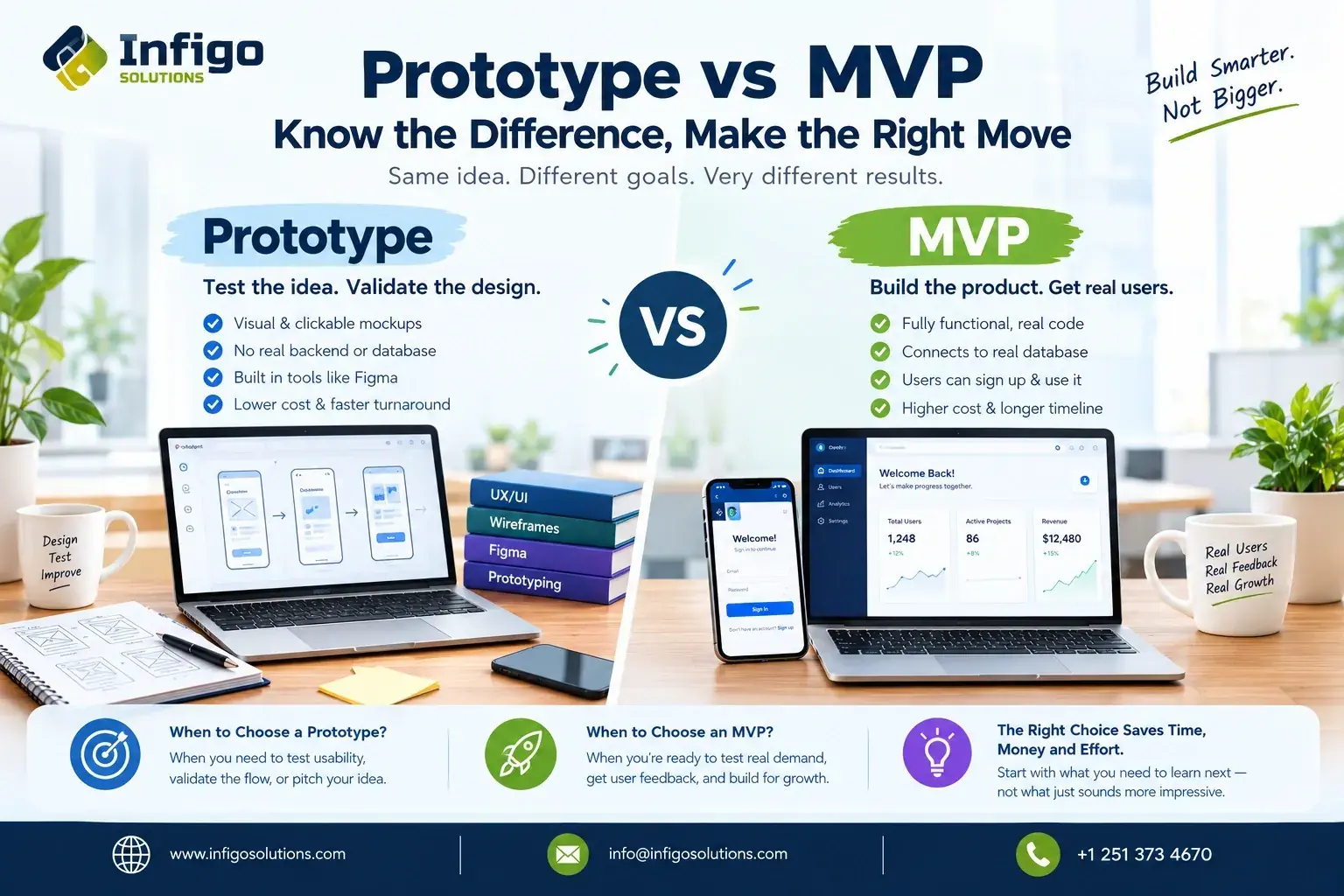
Prototype vs MVP: What's the Difference and Which Do You Need First?
 September 9, 2026
Comments
No comments yet. Be the first to comment!