 September 14, 2026
IT Outsourcing: A Practical Guide for Businesses in 2026

9
Sep
 Max
Max Technology
 0 Comments
IT Outsourcing: A Practical Guide for Businesses in 2026
Every company eventually asks the same question: which parts of the technical work should stay in-house, and which parts make more sense to hand to an outside team? IT outsourcing is the answer for a large share of the software work happening right now, and the reasons behind it have shifted over the past few years from pure cost-cutting toward something more strategic.
This guide covers what IT outsourcing actually includes, the main models companies choose between, real cost expectations, and how to avoid the mistakes that turn an outsourcing engagement into a liability instead of an advantage.
What IT Outsourcing Actually Covers
IT outsourcing is the practice of contracting an external company or team to handle technical work that would otherwise be built and managed internally. That can mean software development, infrastructure management, technical support, QA testing, or a dedicated engineering team working alongside an internal one.
According to Deloitte's Global Outsourcing Survey, cost reduction remains a leading driver, but skilled talent and agility have become equally important reasons companies choose to outsource. That shift matters. IT outsourcing today is less about finding the cheapest labor and more about accessing expertise a company cannot easily hire for on its own timeline.
The Main Outsourcing Models
Not all outsourcing arrangements work the same way. The right model depends on how much control a company wants to keep and how long-term the need is.
| ModelBest For | What It Means | Best For |
| Project-Based Outsourcing | A fixed-scope project handed entirely to an external team | One-off builds with a clear start and end date |
| Dedicated Development Team | An external team works as an extension of your own, long-term | Ongoing product development, startups scaling fast |
| Staff Augmentation | Individual outsourced developers fill specific skill gaps | Short-term gaps in an existing internal team |
| Managed IT Services | An external provider owns an entire function (infrastructure, support, security) | Companies wanting to fully offload a non-core function |
Onshore, Nearshore, or Offshore
Where the outsourced team is located changes cost, communication overhead, and time zone overlap.
| Location Type | Time Zone | Typical Cost Overlap | Communication |
| Onshore | Highest | Full overlap | Easiest, same working hours |
| Nearshore | Moderate | Partial to full overlap | Good, minor time difference |
| Offshore | Lowest | Little to no overlap | Requires more asynchronous process |
Offshore outsourcing typically delivers the largest cost reduction, industry estimates commonly cite 20 to 70 percent savings on operational costs depending on the country, service complexity, and how mature the vendor's delivery process is. Nearshore has grown in popularity because it keeps much of that savings while closing the time zone gap enough for daily collaboration to feel normal.
What This Actually Costs
Pricing depends heavily on location, seniority, and engagement model, but a few general ranges hold up across most projects in 2026.
| Engagement Type | Typical Hourly Rate | Notes |
| Offshore Developer | $25 to $50 | Lowest cost, requires strong process discipline |
| Nearshore Developer | $40 to $80 | Balance of cost and real-time collaboration |
| Onshore Developer | $80 to $150+ | Highest cost, easiest day-to-day communication |
| Dedicated Team (Offshore) | Monthly retainer, often 30-50% below onshore hiring cost | Best for ongoing product work |
Common technology choices for outsourced teams include Azure and AWS for cloud infrastructure, Docker for containerized deployments, .NET or Node.js for backend development, and SQL for database design.
A PwC analysis found that companies outsourcing IT functions report an average 32 percent reduction in labor costs alongside meaningful efficiency gains from automation and specialized delivery models. Those efficiency gains matter as much as the raw hourly rate difference, since a slower, less experienced team can erase cost savings through longer timelines and more rework.
Why Companies Choose to Outsource
The reasons have broadened well beyond cost:
- Access to specialized skills. Niche expertise in AI, cloud architecture, or a specific tech stack is often faster to access externally than to hire and train internally.
- Faster time to market. An experienced outsourced team can start building immediately, without the multi-month hiring cycle a full-time role usually requires.
- Flexible scaling. Teams can grow or shrink with project needs, without the fixed cost and complexity of internal headcount changes.
- Focus on core business. Offloading technical execution frees internal teams to focus on product strategy, sales, and the parts of the business that are hardest to outsource.
- Reduced overhead. No added cost for benefits, office space, equipment, or the recruiting pipeline that comes with in-house hiring.
Risks and How to Manage Them
IT outsourcing goes wrong in a few predictable ways, and each has a straightforward mitigation:
| Risk | Why It Happens | How to Manage It |
| Communication breakdowns | Time zone gaps, unclear specs | Set overlap hours, use async documentation, weekly syncs |
| Quality inconsistency | Vendor cuts corners on testing | Define QA standards upfront, request a trial project first |
| Security and IP concerns | Sensitive data shared externally | NDAs, access controls, code ownership clauses in the contract |
| Hidden costs | Vague scope, scope creep | Fixed-scope contracts or clear change-request pricing |
| Vendor dependency | Over-reliance with no internal knowledge transfer | Require documentation and knowledge-sharing as a deliverable |
Choosing the Right Outsourcing Partner
A few questions separate a reliable outsourcing partner from one that will create more work than it saves:
- Can they show relevant past work? Look for experience with a similar tech stack and project complexity, not necessarily your exact industry.
- How do they handle communication? Ask about their standard process for updates, documentation, and availability during your working hours.
- What does their QA process look like? A partner without a clear testing process will cost more in rework than they saved in hourly rate.
- Who owns the code and IP? This should be explicit in the contract before work begins, not assumed.
- Can they start with a smaller trial project? A short paid trial reveals more about how a partner works than any portfolio review.
Frequently Asked Questions
What is the difference between IT outsourcing and staff augmentation?
IT outsourcing hands an entire project or function to an external team that manages its own process. Staff augmentation embeds individual outsourced developers directly into your existing team and internal workflow.
Is offshore IT outsourcing safe for sensitive projects?
It can be, with the right contractual protections. NDAs, clearly defined IP ownership, and access controls on sensitive systems are standard practice and should be non-negotiable parts of any outsourcing agreement.
How much does IT outsourcing typically save a company?
Estimates commonly cited across industry surveys range from 20 to 70 percent in operational cost savings, depending on location, service complexity, and vendor efficiency. Offshore engagements tend to deliver the largest savings; nearshore offers a smaller but still meaningful reduction with easier collaboration.
What tasks should not be outsourced?
Core product strategy, decisions that require deep institutional knowledge, and anything involving highly sensitive data without strong contractual protections are usually better kept in-house, or outsourced only to a highly vetted, long-term partner.
How long does it take to start an IT outsourcing engagement?
A well-scoped project can often begin within one to two weeks of signing, compared to a multi-month hiring cycle for an equivalent in-house role. Dedicated team engagements may take slightly longer to fully staff depending on the skill set required.
Does IT outsourcing work for startups, or only large enterprises?
Both. Startups commonly use outsourcing to access a full product team without the cost of building one internally, while enterprises use it to scale specific functions or modernize legacy systems without growing permanent headcount.
Getting Started
The decision to outsource is really a decision about where a company's limited attention should go. Work that requires deep institutional context stays internal. Work that requires specialized execution, at a pace or cost the internal team cannot match, is a strong candidate for outsourcing.
If you are evaluating a dedicated outsourced team for ongoing product work, our dedicated development teams page covers how that engagement model works in practice. For a single, well-scoped project, our custom software development services page walks through the engagement process from discovery to delivery. Startups specifically weighing outsourcing against building an in-house team may also find our guide on custom software development for startups useful for thinking through that build-versus-buy decision more broadly.
For a tailored estimate based on your specific project scope, our Startup Quote calculator or Enterprise Quote calculator can walk you through a realistic budget in a few minutes.
We Are Awesome.
A business consulting agency is involved in the planning, implementation, and education of businesses. We work directly.


.webp "LinkedIn")
Leave a Message

Max
Senior Consultant
Helps businesses evaluate outsourcing models, choose the right delivery partner, and plan realistic budgets for offshore and nearshore engagements.
Recent Posts
 September 11, 2026
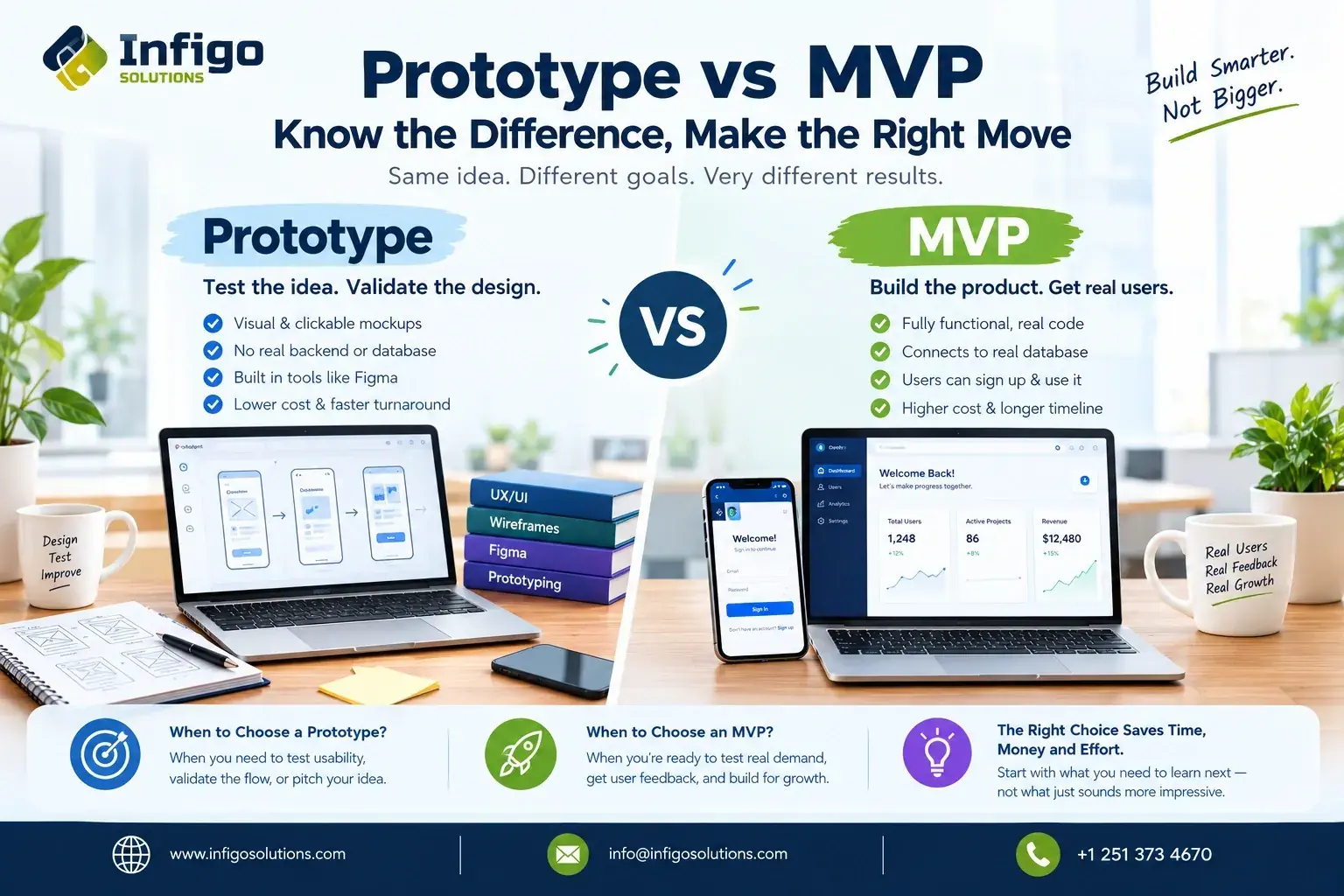
Prototype vs MVP: What's the Difference and Which Do You Need First?
September 9, 2026
Comments
No comments yet. Be the first to comment!