
 September 14, 2026
How to Choose an MVP Development Company (2026 Checklist)
27
Aug
 Morgan
 Startups
 0 Comments
How to Choose an MVP Development Company (2026 Checklist)
How to Choose an MVP Development Company
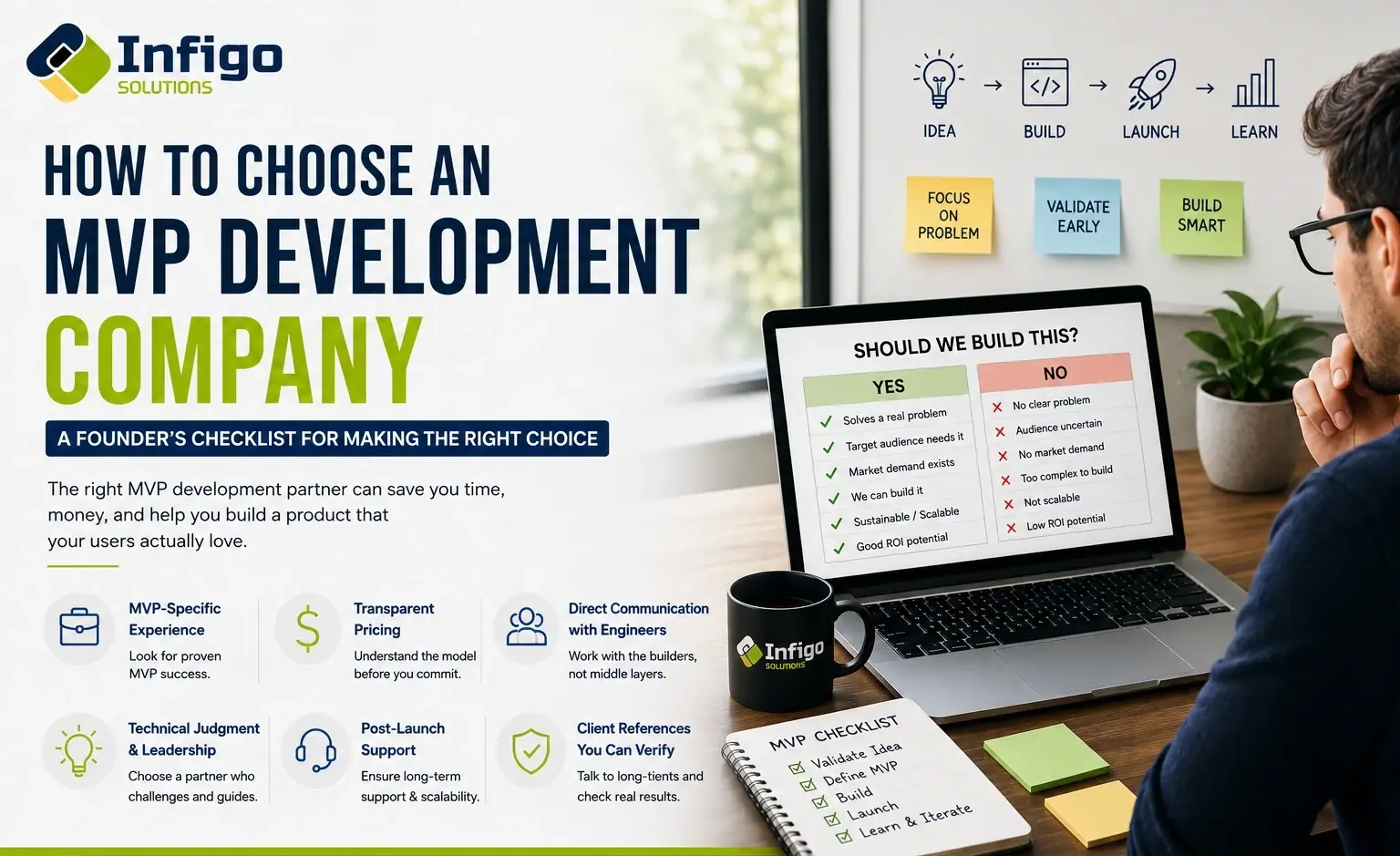
Choosing the right MVP development company comes down to five things: proven MVP-specific experience, not just general software work, a transparent fixed-scope pricing model, direct communication with the engineers building your product, a clear post-launch support plan, and references you can actually verify. Get these five right, and the rest of the decision gets much easier.
Building a minimum viable product is one of the highest-stakes decisions a founder makes. The wrong development partner doesn't just cost money. It costs months of runway, and sometimes the window of opportunity a startup was trying to capture in the first place. Yet most founders evaluate development companies the same way they'd evaluate any vendor: by portfolio and price. That's not enough for an MVP, where speed, judgment, and technical honesty matter more than a polished case-study page.
This guide walks through what actually separates a good MVP partner from a risky one.
What Makes MVP Development Different From Regular Software Development
A general software agency builds what it's told to build. An MVP-focused team pushes back on scope, on features, on timelines, because their job isn't just to write code. It's to help a founder reach a testable product as fast as possible without wasting budget on things the market hasn't validated yet.
This distinction matters because poorly scoped MVPs are one of the most common reasons early-stage products fail, not because the code was bad, but because the team built too much, too early, without validating assumptions first. A company that understands MVP methodology will actively help you cut scope. A company that just executes requirements will build whatever you ask for, cost overruns and all.
The MVP Development Company Checklist
1. Ask for MVP-Specific Case Studies, Not Just Any Case Studies
A portfolio full of enterprise projects doesn't tell you how a team performs under MVP constraints: small budget, tight timeline, unclear requirements. Ask specifically:
- "Show me an MVP you built from a founder's initial idea, not a fully-specified brief."
- "What did you cut from the original scope, and why?"
- "What happened after launch? Did the client raise funding, pivot, or shut down?"
Teams that can answer these in detail have real MVP experience. Teams that pivot to talking about their tech stack usually don't.
2. Understand the Pricing Model Before You Talk Features
MVP pricing generally falls into three models:
- Fixed price, best when scope is well-defined and small
- Time and materials, better for evolving scope, but requires trust and reporting discipline
- Sprint-based or milestone-based, a middle ground many MVP-focused teams prefer, since it gives founders checkpoints to review progress and reprioritize every 1-2 weeks
None of these is inherently better. A company that can't clearly explain which model they use and why is a red flag.
3. Confirm Who Is Actually Doing the Work
Many agencies sell you on senior talent during the pitch, then staff the project with whoever is available. Before signing, ask:
- Who is the actual engineer/team assigned to this project?
- Can I speak with them directly, or only through an account manager?
- Will the same team stay on through launch, or does staffing rotate?
A partner offering dedicated MVP development services should be able to answer all three without hesitation.
4. Evaluate Their Technical Judgment, Not Just Their Technical Skill
The best signal here is how a company responds to your idea in the sales conversation itself. Do they:
- Ask about your target user and core problem before talking about tech stack?
- Suggest cutting features you thought were essential?
- Flag assumptions in your plan that haven't been validated yet?
If a company agrees with everything you propose without pushback, they're optimizing for winning the deal, not for your product's success.
5. Look for Technical Leadership, Not Just Development Capacity
Many early-stage founders don't have a technical co-founder, which means the development company is effectively acting as their engineering judgment for months. This is where the line between a team that writes code and a team that also thinks about architecture, scalability, and technical risk matters most. Some founders solve this by pairing MVP development with fractional CTO support, someone who owns the technical strategy across the whole build, not just the current sprint.
6. Ask About Post-Launch Support Before You Need It
An MVP is the start of a product's life, not the end of the engagement. Before signing, clarify:
- What happens after launch? Is there a support retainer, or does the relationship end?
- How are bugs found post-launch handled? Is there a warranty period?
- Can this team scale the MVP into a full product, or is that a different engagement entirely?
7. Verify References the Right Way
Don't just ask for references. Ask specific questions when you call them:
- "Would you hire this team again?"
- "What went wrong during the project, and how was it handled?"
- "Did the final product match what was originally scoped, or did things change significantly?"
A company confident in its work will give you references who'll answer honestly, including the rough parts.
Red Flags to Watch For
- Refusing to name the specific engineers who'll work on your project
- No clear answer on what happens if the MVP takes longer than estimated
- Pushing you toward more features rather than fewer
- No process for validating your assumptions before development starts
- Case studies with no measurable outcomes (funding raised, users acquired, retention data)
For a broader look at evaluating any software development partner (not just for MVPs), see our guide on how to choose the right software development company.
Frequently Asked Questions
How much does it cost to hire an MVP development company? Costs vary widely by scope and region, typically ranging from a few thousand dollars for a very narrow MVP to $30,000+ for a more complex product with multiple user flows. Fixed-scope, sprint-based pricing tends to give founders the clearest cost picture upfront.
How long does it take an MVP development company to build a product? Most focused MVPs take 6-12 weeks from kickoff to launch, assuming scope stays disciplined. Timelines stretch significantly when scope grows mid-build, which is itself a sign of a partner that isn't managing scope well.
Should I choose a freelancer or an MVP development company? Freelancers can work for very narrow, well-defined builds. A company brings redundancy (if one person is unavailable, the project doesn't stall), broader skill coverage, and typically a more structured process, which matters more as product complexity grows.
Do I need a technical co-founder if I'm hiring an MVP development company? Not necessarily. Many non-technical founders successfully launch MVPs by pairing a development partner with either an advisor or fractional CTO who represents their technical interests and reviews decisions independently.
What's the difference between an MVP development company and a product development agency? An MVP-focused company specializes in fast, disciplined builds aimed at validation. A broader product development agency may be better suited once you're past validation and building toward scale. The two skill sets overlap but aren't identical.
Choosing the right partner is the single highest-leverage decision in the MVP process. It's worth the extra week of due diligence before signing. If you're evaluating options, it's worth reading about common reasons MVPs fail alongside this checklist, since many failure patterns trace directly back to the partner selection stage.
We Are Awesome.
A business consulting agency is involved in the planning, implementation, and education of businesses. We work directly.


.webp "LinkedIn")
Leave a Message
Recent Posts
 September 11, 2026
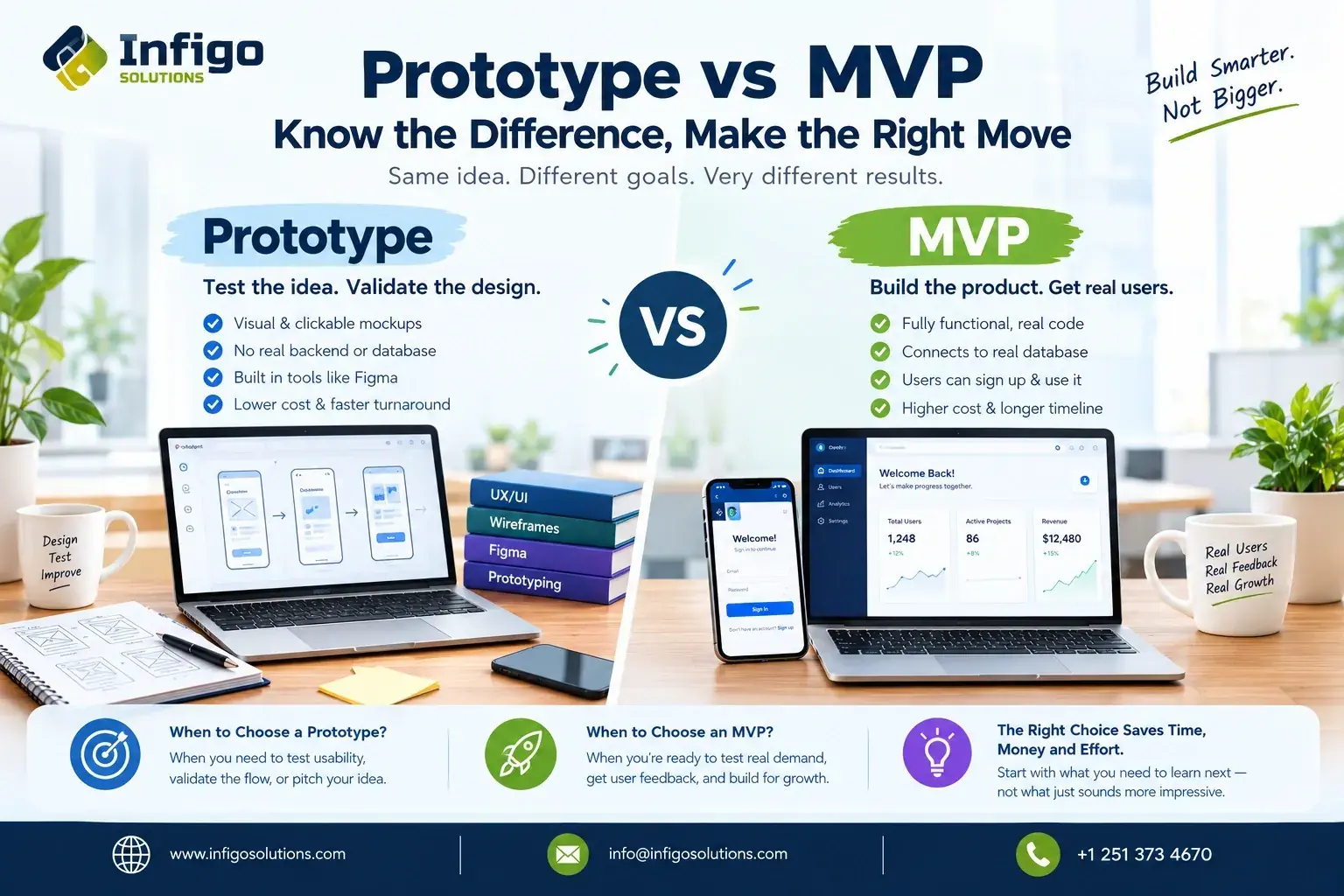
Prototype vs MVP: What's the Difference and Which Do You Need First?
 September 9, 2026
Comments
No comments yet. Be the first to comment!