
 September 14, 2026
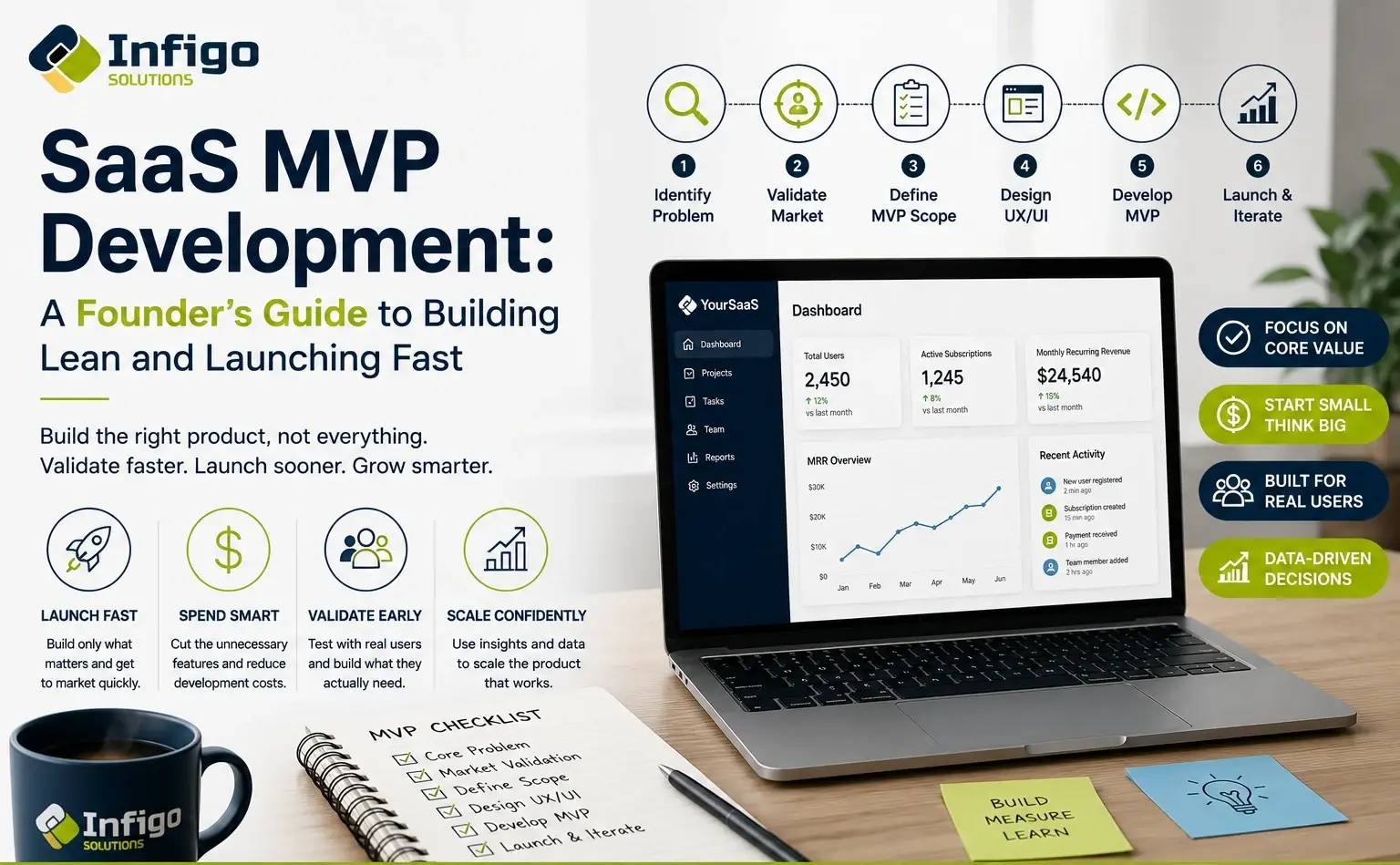
SaaS MVP Development: A Founder's Guide to Building Lean and Launching Fast
2
Sep
 Morgan
 Startups
 0 Comments
SaaS MVP Development: A Founder's Guide to Building Lean and Launching Fast
Building a SaaS product from scratch is tempting to over-scope. Founders often start with a full feature list in mind: dashboards, integrations, admin panels, billing, analytics, and try to build all of it before showing the product to a single real user. This is the single most common reason SaaS MVPs take twice as long and cost twice as much as planned.
A SaaS MVP isn’t a smaller version of the final product. It’s the smallest version that lets you test whether people will actually pay for the core value you’re offering. Everything else can wait.
Why SaaS MVPs Are Different From Other MVPs
A SaaS product has a few requirements a simple app doesn’t: multi-tenancy (each customer’s data stays separate), subscription billing, user roles and permissions, and usually some form of onboarding flow. These aren’t optional extras. They’re part of what makes a SaaS product a SaaS product, even at MVP stage. The skill is deciding how simple each of these can be at launch without breaking the experience.
What To Include In A SaaS MVP (And What To Cut)
The table below is a starting framework. The right answer always depends on your specific product, but this is where most SaaS MVPs should land.
| Feature | Include in MVP? | Why |
| Core workflow (the one thing your product does) | Yes, build this first, build it well | This is what you’re actually testing |
| Basic subscription billing (one plan, one price) | Yes | You need to know if people will pay, not just sign up |
| User roles and permissions | Simplified, owner + member is usually enough | Full role-based access control is rarely needed on day one |
| Onboarding flow | Yes, but minimal, a 3-step setup beats a 10-step tour | A confusing first five minutes loses trial users before they see any value |
| Third-party integrations | No, unless the integration IS the product | Integrations are high-effort, low-validation-value early on |
| Admin analytics dashboard | No | You can pull this data manually or via a database query for the first cohort of users |
| Multiple pricing tiers | No, start with one plan | Tier structure should come from what customers actually ask for, not guesswork |
| Mobile app | No, unless mobile-first is the entire premise | A responsive web app covers most early SaaS use cases |
Pros and Cons of a Lean SaaS MVP
| Pros | Cons |
| Faster time to first paying customer | Some early users will ask for features that don’t exist yet |
| Lower upfront cost and less capital at risk | The product may feel incomplete to a subset of evaluators |
| Feedback shapes the roadmap instead of internal guesswork | Requires discipline to keep saying “not yet” to feature requests |
| Easier to pivot if the core assumption is wrong | A too-minimal MVP can undersell the product’s real potential |
The way around most of the “cons” above is communication. A clear roadmap that shows what’s coming next reassures early customers far more than trying to ship everything at once.
How Long Does a SaaS MVP Actually Take?
Timelines vary widely depending on scope, but a realistically-scoped SaaS MVP, one core workflow, basic billing, simple onboarding, typically takes 8 to 14 weeks from a clear specification to a production launch. Products that stretch past 6 months almost always did so because scope grew mid-build, not because the original plan was wrong. Locking scope before development starts is the single biggest lever founders have over their own timeline.
One useful way to know if you’re ready to move past MVP and start scaling: run a product-market fit survey using the widely-used “40% test.” If 40% or more of your active users say they’d be very disappointed without your product, that’s historically been a strong signal you’ve found something worth investing further.
Common Mistakes That Turn a Fast MVP Into a Slow One
- Adding features because a single user asked for them. One request isn’t a pattern. Wait for the second or third before building.
- Choosing an unfamiliar tech stack “for scale.” Most SaaS MVPs never need the scale they’re architected for on day one. Familiar, boring technology ships faster.
- Skipping a real onboarding flow. A confusing signup experience will sink a good product before anyone sees its value.
- Treating the MVP as the finished product. An MVP is a starting point for learning, not a launch-and-forget deliverable.
For a deeper look at how to choose the team that builds this with you, see our guide on how to choose an MVP development company, and if you’re weighing build order and priorities, MVP Development Steps: The 6-Stage Playbook walks through the process end to end.
Frequently Asked Questions
Do I need a technical co-founder to build a SaaS MVP?
Not necessarily. Many non-technical founders successfully launch SaaS MVPs by working with a dedicated MVP development team or pairing a development partner with a fractional CTO who represents their technical interests.
Should my SaaS MVP be free or paid from day one?
Charging from day one, even a small amount, tends to produce more honest signal than a free trial alone. People who pay are telling you something real about value, not just curiosity.
How many features should a SaaS MVP have?
As few as possible while still solving the core problem end to end. If you can describe your MVP’s value in one sentence and it still holds true after cutting a feature, cut it.
What’s the biggest technical risk in a SaaS MVP?
Multi-tenancy done poorly. If customer data isn’t properly isolated from day one, retrofitting it later is expensive and risky. This is one area worth getting right even at MVP stage.
The Bottom Line
Building a SaaS MVP is as much a scoping exercise as it is a technical one. It becomes complicated when teams try to build everything at once instead of focusing on the core value proposition and validating it with real users.
A lean MVP gives founders the opportunity to launch faster, reduce upfront costs, collect meaningful feedback, and make better decisions about what to build next.
If you’re evaluating how to approach yours, it’s worth reading alongside how to choose an MVP development company, since the two decisions, what to build and who builds it, usually happen together.
We Are Awesome.
A business consulting agency is involved in the planning, implementation, and education of businesses. We work directly.


.webp "LinkedIn")
Leave a Message
Recent Posts
 September 11, 2026
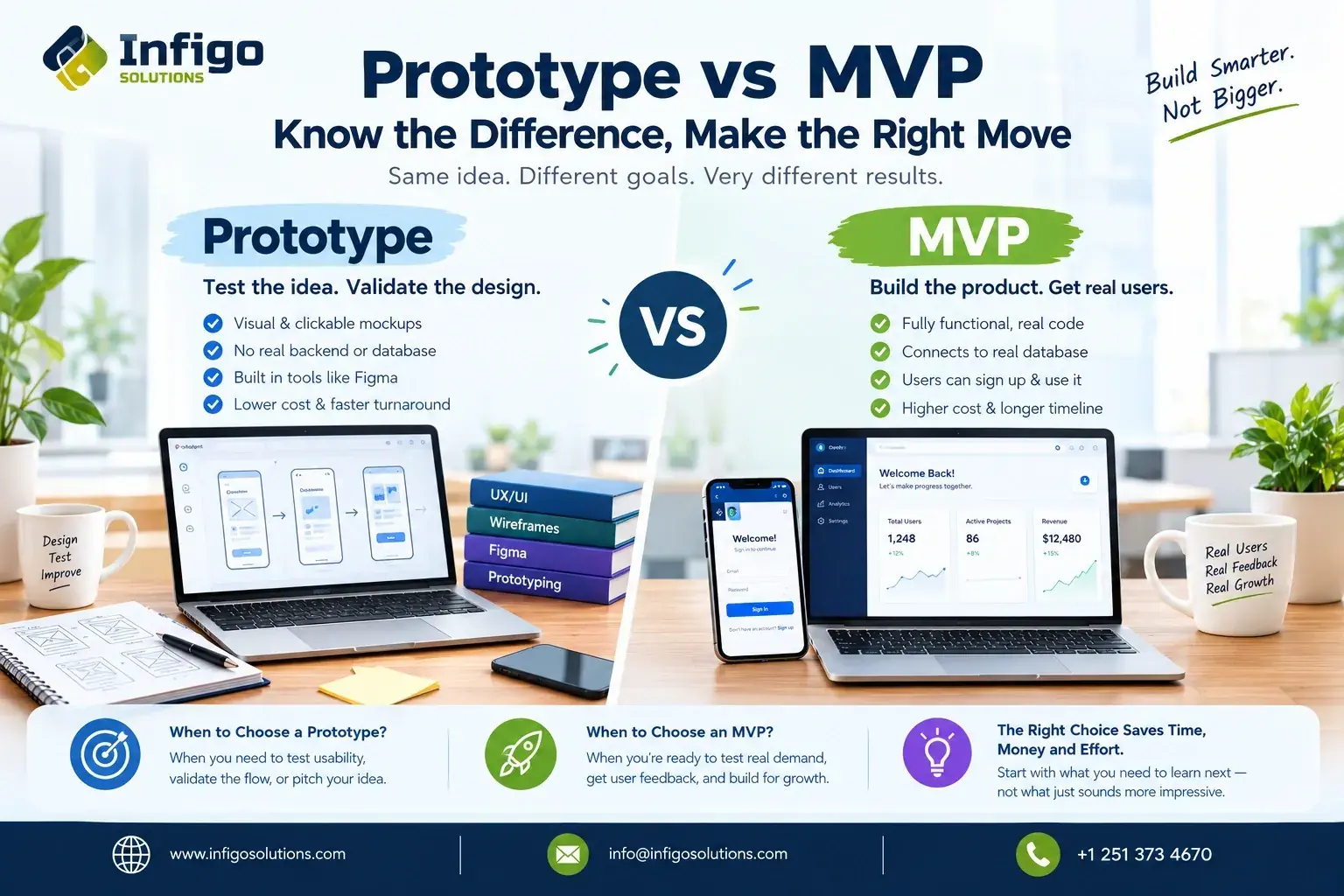
Prototype vs MVP: What's the Difference and Which Do You Need First?
 September 9, 2026
Comments
No comments yet. Be the first to comment!