
 September 14, 2026
MVP to Product Launch Roadmap: The 4-Step Guide Founders Actually Need
29
Jun
 Admin
Admin Business
 0 Comments
MVP to Product Launch Roadmap: The 4-Step Guide Founders Actually Need
MVP to Product Launch: The Roadmap Most Founders Wish They Had Earlier
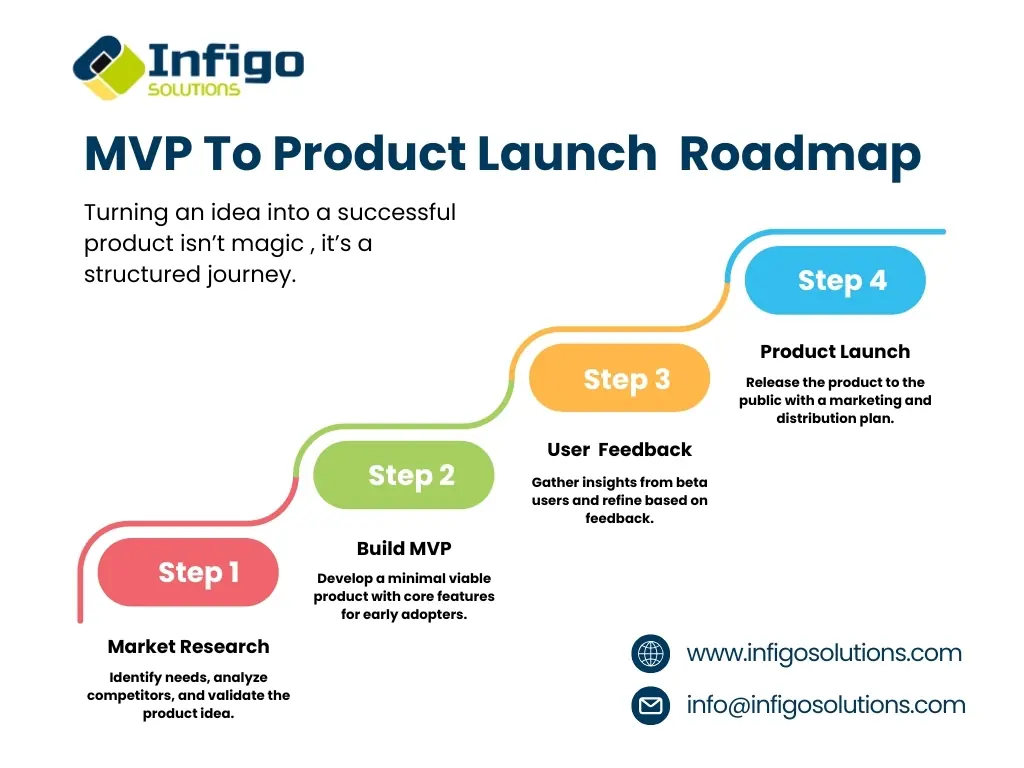
Turning an idea into a successful product is not magic. It is a structured journey.
That line sounds simple. But the number of founders who treat the path from concept to launch as something to figure out along the way, rather than something to map before they start moving, is staggering. And the cost of that approach shows up reliably, in wasted sprints, in products that launch to silence, in teams that burned through their runway before they ever found product-market fit.
This is the roadmap. Not the inspirational version. The practical one.
What Does the MVP to Product Launch Roadmap Actually Look Like?
Most people know the term MVP. Fewer understand that the journey from MVP to a full product launch is its own distinct process, with specific steps, specific decisions, and specific failure points at each stage.
The roadmap has four stages. Each one builds on the last. Skipping any of them does not speed up the journey. It just means the problems you avoided show up later, when they are more expensive to fix.
Step 1: Market Research, Validate Before You Build Anything
The most common question founders ask at this stage is "how do I validate my idea?" The better question is "what would I need to see to be convinced this idea is not worth building?"
That reframe matters. Validation done properly is not a search for confirmation. It is a genuine attempt to find the reasons the idea might fail before spending months building it.
Effective market research at the pre-MVP stage covers three specific areas.
Identifying real needs. Not assumed needs, not projected needs, but documented evidence that a specific group of people experience a specific frustration frequently enough and intensely enough that they are actively looking for a solution. The strongest signal here is people who have already built workarounds, because workarounds are proof that the pain is real and existing solutions are insufficient.
Analyzing the competitive landscape. Every space that has real demand has competitors. The goal is not to find a space with no competition, which usually means no demand, but to find the specific angle where existing solutions fall short. What do the one-star reviews of competing products say? What do users wish existed that does not? That gap is where differentiation lives.
Validating the product idea against real feedback. This means conversations, not surveys. Talking to fifteen to twenty people who match your target user profile, listening more than pitching, and paying specific attention to the moments when their experience does not match your assumptions.
The output of this stage is not a polished market research document. It is a set of validated assumptions that give you enough confidence to start building, and a clear picture of the specific user you are building for.
Step 2: Build the MVP, Core Features Only, Nothing Else
Every founder arrives at this stage with a list of features. The list is always too long.
An MVP, properly understood, is the smallest possible version of your product that lets a real user accomplish the primary thing your product exists to do. That is it. Not the second most important thing. Not the feature that would be really useful to have. The one core thing.
The discipline this requires is harder than it sounds, because every feature on the list feels justified. Every edge case feels important. Every additional function feels like it is making the product more useful.
What it is actually doing is making the product more expensive to build, slower to ship, and harder to evaluate when it finally reaches users. Because when an MVP has fifteen features and users do not engage, you do not know which of the fifteen things failed. When it has one core function that works well, you get a clear answer.
Building for early adopters specifically is the other thing worth emphasizing at this stage. Early adopters are not your eventual mainstream users. They are the people who are frustrated enough with the status quo to try something unfinished. They have a higher tolerance for rough edges. They give better feedback. And they are the ones who, if you get the core right, become the advocates who bring in the next wave.
Build for them. Not for the hypothetical mainstream user who will come later.
Step 3: User Feedback, The Stage Most Founders Rush Through
The MVP is live. Users are trying it. The temptation to move immediately into building the next set of features is almost overwhelming.
Resist it.
The feedback stage is where the roadmap either gets validated or corrected, and the quality of that correction depends entirely on the quality of the feedback you collect and how honestly you interpret it.
Beta user feedback comes in two forms, and both matter.
What users say. Direct responses to questions, feature requests, complaints, confusion points. This is the feedback most founders collect and most founders over-index on, because it is the most visible. The problem is that what users say and what users do are often different things. People are polite. They tell you what they think you want to hear. They suggest features they will never use.
What users do. Behavioral data. Where do they spend time in the product? Where do they drop off? Which features do they return to and which do they ignore? What does the actual usage pattern look like compared to the usage pattern you designed for?
The feedback that should drive your refinement decisions is the behavioral data, with the verbal feedback used to understand the why behind the patterns the data reveals.
Refine based on what you observe, not just what you hear. The product that emerges from this stage should be demonstrably better at the core thing than the version that entered it. If it is not, you need another feedback cycle before moving to launch.
Step 4: Product Launch, Release With a Plan, Not Just a Button
Launching a product without a marketing and distribution plan is the equivalent of opening a restaurant, cooking a great meal, and forgetting to tell anyone the restaurant exists.
A product launch is not a single moment. It is a coordinated sequence of activities designed to get the right product in front of the right people at the right time, with enough momentum to generate the early traction that builds on itself.
The distribution question is the one most technical founders underinvest in. How will people find out this product exists? What is the specific channel, the specific community, the specific partnership or press strategy that reaches the exact people who have the problem this product solves? Generic marketing at launch rarely works. Targeted distribution to the audience most likely to become early advocates almost always does.
The marketing plan does not need to be elaborate. It needs to be specific. Which channels, which messages, which communities, which partnerships, in which sequence. A focused launch to a small, highly relevant audience consistently outperforms a broad launch to a general one.
The Thread That Connects All Four Steps
Looking at the full roadmap, there is a single principle running through every stage.
Every decision should be driven by real information, not assumptions.
Market research validates the need before the build. The MVP tests the core function before adding complexity. The feedback stage corrects the course before the launch. The launch plan targets the right audience before spending on reach.
Founders who follow this sequence do not avoid all problems. They encounter problems earlier, when they are cheaper to fix, and with enough information to fix them correctly. That is the structural advantage the roadmap provides.
Frequently Asked Questions
What is the difference between an MVP and a prototype?
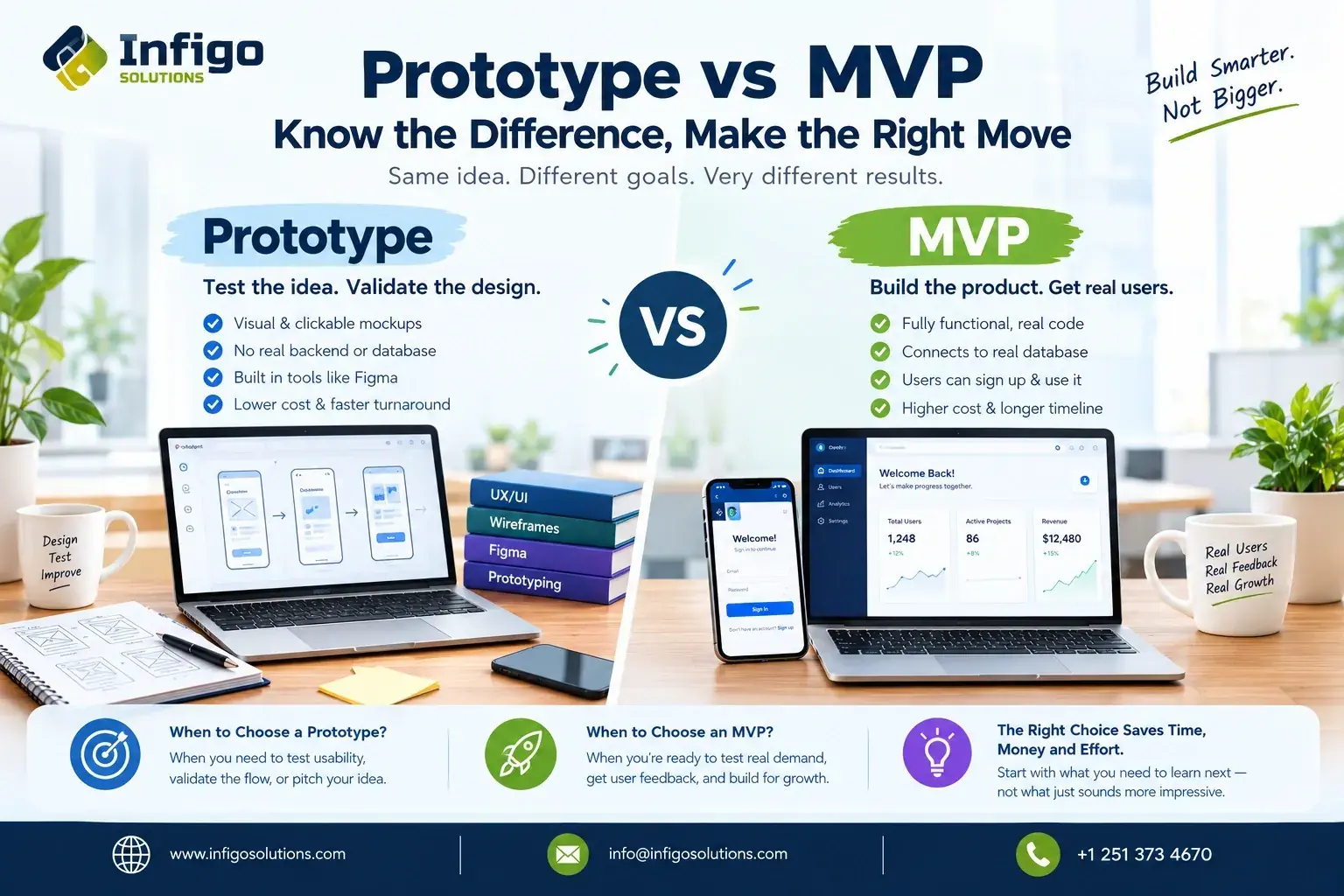
A prototype is a visual or interactive mockup used to test design and user flow before any real functionality is built. An MVP is a functional product, minimal but real, that actual users can use to accomplish something. Prototypes test concepts. MVPs test whether the concept works when real users interact with real functionality.
How many beta users do you need before moving to launch?
There is no universal number, but most product teams find that patterns in user behavior and feedback become clear between twenty and fifty active beta users. The goal is not a specific number but enough usage data to identify consistent patterns and enough feedback to understand the reasons behind those patterns.
How long should the feedback stage last before launching?
Long enough to make at least one meaningful improvement to the product based on what you observed, and short enough that you are not using the feedback stage as a way to avoid the vulnerability of a public launch. Most MVP feedback cycles run four to eight weeks. Beyond that, you are usually iterating on diminishing returns.
What should a product launch plan include at minimum?
A defined target audience, a primary distribution channel for reaching them, a clear and specific message about what the product does and who it is for, a timeline with specific milestones, and a way to measure whether the launch is working. Everything else builds on those five elements.
How do you know when an MVP is ready to move to full product?
When it has retained a meaningful percentage of the users who tried it, when those users are returning without being prompted, and when the feedback has shifted from "this is confusing" to "I wish it also did this." Retention is the clearest signal. If users come back, the core is working.
The Honest Version of What This Journey Looks Like
Turning an idea into a product that real people use and pay for is structured work. It follows a sequence. Each stage feeds into the next. Skipping steps does not make the journey shorter. It makes it longer, because the problems you bypassed show up downstream at higher cost.
The founders who move through this roadmap successfully are not the ones who never get stuck. They are the ones who know which stage they are in, what question that stage is designed to answer, and what a good enough answer looks like before they move forward.
That clarity is available to any founder who decides to use it.
If you are navigating this journey and want a team that has helped founders move from idea to launch across dozens of products and industries, Infigo Solutions offers free consultations for founders who are serious about building something that lasts. Reach out at info@infigosolutions.com and let's map out what your next stage looks like.
We Are Awesome.
A business consulting agency is involved in the planning, implementation, and education of businesses. We work directly.


.webp "LinkedIn")
Leave a Message
Recent Posts
 September 11, 2026
Prototype vs MVP: What's the Difference and Which Do You Need First?
 September 9, 2026
Comments
No comments yet. Be the first to comment!