 September 18, 2026
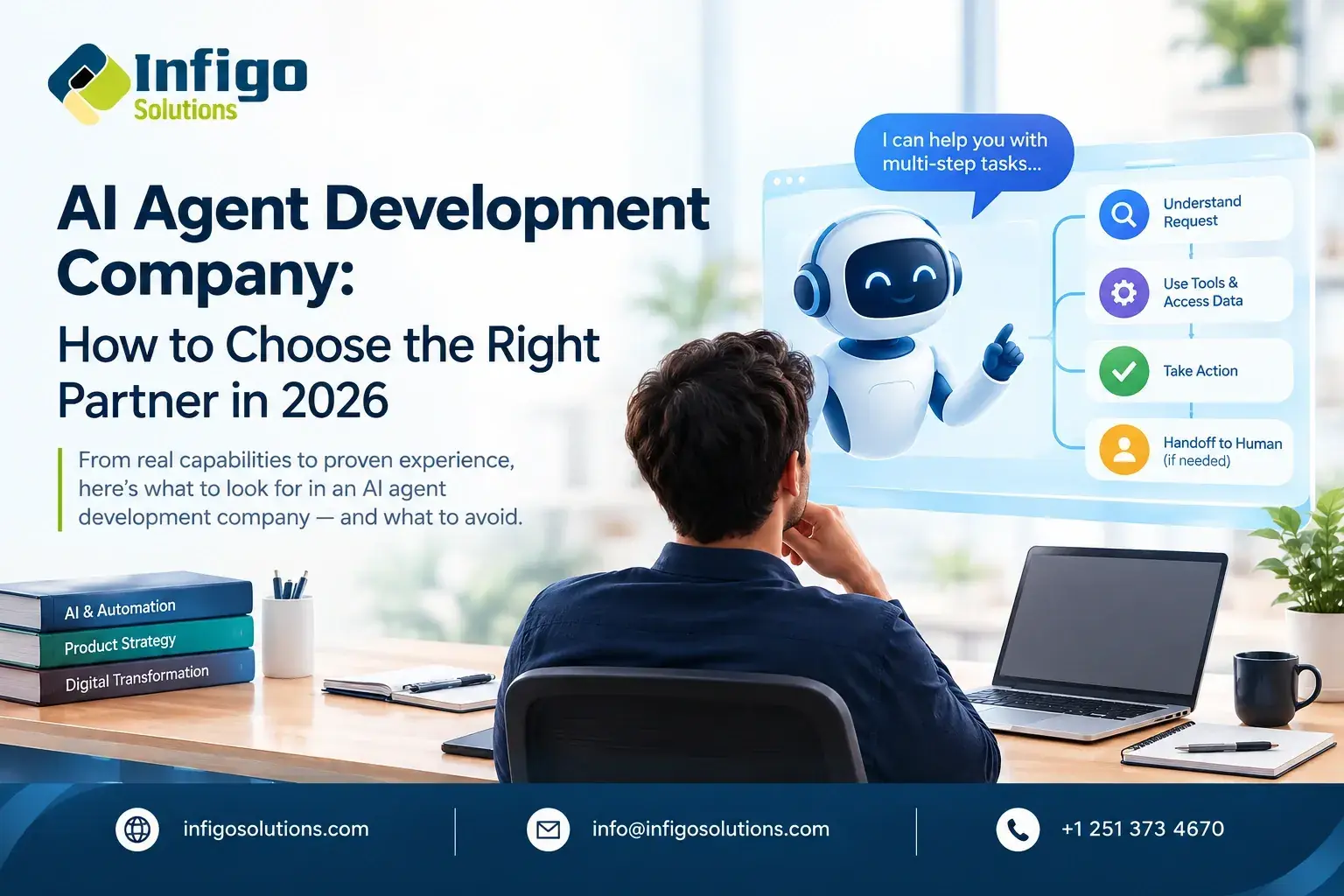
AI Agent Development Company: How to Choose the Right Partner in 2026
18
Sep
 Morgan
 AI
AI 0 Comments
AI Agent Development Company: How to Choose the Right Partner in 2026
Agentic AI moved from experiment to expectation faster than almost any technology shift in recent memory. According to Gartner, 40 percent of enterprise applications will feature task-specific AI agents by the end of 2026, up from less than 5 percent in 2025. That speed creates a real problem for founders and product teams: a lot of companies now call themselves an AI agent development company, but far fewer actually know how to build an agent that works reliably once it leaves the demo.
This guide covers what a company in this space actually does, how to tell a strong one from a weak one, what realistic costs and timelines look like, and the questions worth asking before you sign a contract.
What This Kind of Company Actually Does
A firm working in this space builds AI systems that go beyond answering questions. Unlike a standard chatbot, which mainly responds to prompts, an agent can plan a sequence of steps, use connected tools, access live systems, take approved actions, and hand off to a human when a task falls outside its scope.
That distinction matters because it changes what "done" means. A chatbot project succeeds if it answers questions accurately. An agent project succeeds if it can complete a multi-step task reliably enough that a person can hand it off without monitoring every step. This is a meaningfully higher bar, and it's the main reason agent projects fail more often than simpler AI features when the scope isn't handled carefully.
AI Agent vs Chatbot vs AI Feature
| Type | What It Does | Example |
| AI Feature | Assists within a single step | Suggesting a reply, summarizing a document |
| Chatbot | Answers questions, explains a process | FAQ bot, support triage bot |
| AI Agent | Plans and executes multi-step tasks using tools | Resolving a support ticket end to end, reconciling records, scheduling and confirming a task |
Not every use case needs a full agent. If AI only needs to support a person mid-task, a simpler AI feature is usually the right scope, faster to build, and easier to validate. An agent makes sense specifically when a process has several steps and a defined outcome that currently requires a human to move it forward manually.
What to Build First With a Custom AI Agent Partner
The strongest AI agent development services engagements start narrow. A good partner will push back on a broad, do-everything agent and instead scope one task with a clear definition of success:
- A single, well-defined workflow. Sorting support requests, reconciling records, scheduling payments, handling one type of customer request, not an "AI employee" that does everything from day one.
- Tool access scoped to what the task needs. An agent connected to every internal system on day one is harder to test, harder to secure, and harder to trust than one with narrow, deliberate access.
- A clear error and handoff path. What happens when the agent doesn't understand a request, can't access needed data, or faces a risky action matters as much as what happens when everything works.
- Testing against real, messy inputs. A demo built on clean, curated examples tells you very little about how the agent will behave with incomplete requests and unclear phrasing.
- A measurable definition of reliability. Before development starts, there should be agreement on what percentage of tasks the agent needs to complete correctly for the project to be considered a success.
What It Costs to Work With One
Pricing depends on task complexity, the number of tools and systems the agent needs to connect to, and how much error handling is required. A few ranges hold up across most projects in 2026.
| Project Type | Typical Cost Range | Typical Timeline |
| Single-task AI agent (one workflow, limited tool access) | $25,000 to $50,000 | 6 to 10 weeks |
| Multi-step AI agent with several integrations | $50,000 to $100,000 | 10 to 16 weeks |
| Multi-agent system with orchestration | $100,000 to $200,000+ | 4 to 8 months |
| Ongoing monitoring and reliability tuning | 15 to 25 percent of build cost annually | Ongoing |
Enterprise-grade compliance, security review, and human-in-the-loop approval workflows typically add 20 to 40 percent on top of these ranges, particularly in regulated industries.
How to Choose the Right AI Agent Development Company
A handful of questions separate a genuinely capable AI agent developer from one that will just wrap an API call and call it agentic:
- Do they scope one task well instead of promising broad capability? A company proposing a fully autonomous, do-anything agent on day one is underestimating both cost and reliability risk.
- How do they handle failure and handoff? Ask specifically what happens when the agent is uncertain, and whether there's a human-in-the-loop path for higher-risk actions.
- Do they test against realistic, messy inputs before launch? A polished demo built on ideal examples is not evidence the agent will hold up in production.
- What is their approach to tool and data access? Strong AI agent development services scope access deliberately rather than connecting an agent to everything available.
- Can they explain their model choice? The most expensive, most capable model isn't automatically the right one; cost per interaction compounds quickly once an agent runs at real volume.
- Do they offer a dedicated team or a one-off build? Agents typically need ongoing tuning after launch, so a partner set up for continued iteration is usually a better fit than a company that disappears after handoff.
Common Mistakes to Avoid
- Choosing broad scope over narrow reliability. An agent that attempts everything and does most things unreliably is worse than one that does one thing consistently well.
- Skipping the failure path. Agents that always respond confidently, even when they shouldn't be confident, erode trust faster than an honest "I need a human to confirm this."
- Evaluating only the demo. Demos are built to succeed. Ask how the company plans to test against real, imperfect conditions before launch, not just during the sales pitch.
- Underestimating post-launch tuning. Agent performance drifts as usage patterns evolve, and a company with no plan for ongoing monitoring is setting the project up to degrade quietly over time.
Frequently Asked Questions
How do I choose the right AI agent development company?
Look for a company that scopes one task well rather than promising broad capability, has a clear plan for handling failures and human handoffs, and tests against realistic inputs rather than curated demos. Ask about their approach to tool access, model selection, and post-launch tuning before signing a contract.
What's the difference between an AI agent development company and a general AI development agency?
An AI agent development company specializes specifically in systems that plan and execute multi-step tasks using tools, which requires different evaluation, testing, and reliability practices than building a single AI feature or a standard chatbot.
How much does it cost to hire an AI agent development company?
A single-task agent with limited tool access typically costs $25,000 to $50,000. Multi-step agents with several integrations typically run $50,000 to $100,000, and multi-agent systems with orchestration can run $100,000 to $200,000 or more.
Which companies offer AI agent development platforms versus custom development?
Platforms offer pre-built agent frameworks that are faster to start with but less flexible for unique workflows. A custom AI agent development company builds around your specific systems and processes, which usually performs better for workflows that don't fit a generic template.
Can an AI agent development company build for enterprise compliance needs?
Yes, but it should be discussed explicitly upfront. Compliance, audit trails, and human-in-the-loop approval requirements typically add 20 to 40 percent to standard project costs and should be scoped from the beginning rather than added later.
How long does it take to build a working AI agent?
A single-task agent with limited scope typically takes 6 to 10 weeks. Multi-step agents with several tool integrations typically take 10 to 16 weeks, and multi-agent systems can take 4 to 8 months depending on orchestration complexity.
Getting Started
The organizations getting real value from agents right now are not the ones chasing the broadest possible capability. They're scoping one task, testing it against reality, and expanding only once it's proven reliable.
Our AI agent development page covers how we approach this kind of narrow-first build, and our AI product development page covers AI features and products more broadly, for cases where a full agent isn't the right starting point. If you're still validating whether an agent needs to be an MVP first, our guide on AI MVP development services walks through that decision in more detail.
For a tailored estimate based on your specific use case, our Startup Quote calculator or Enterprise Quote calculator can walk you through a realistic budget in a few minutes.
We Are Awesome.
A business consulting agency is involved in the planning, implementation, and education of businesses. We work directly.


.webp "LinkedIn")
Leave a Message

Morgan
Senior Consultant
Helps founders and enterprises evaluate AI agent partners, scope reliable AI systems, and budget realistically for agentic AI projects.
Recent Posts
September 18, 2026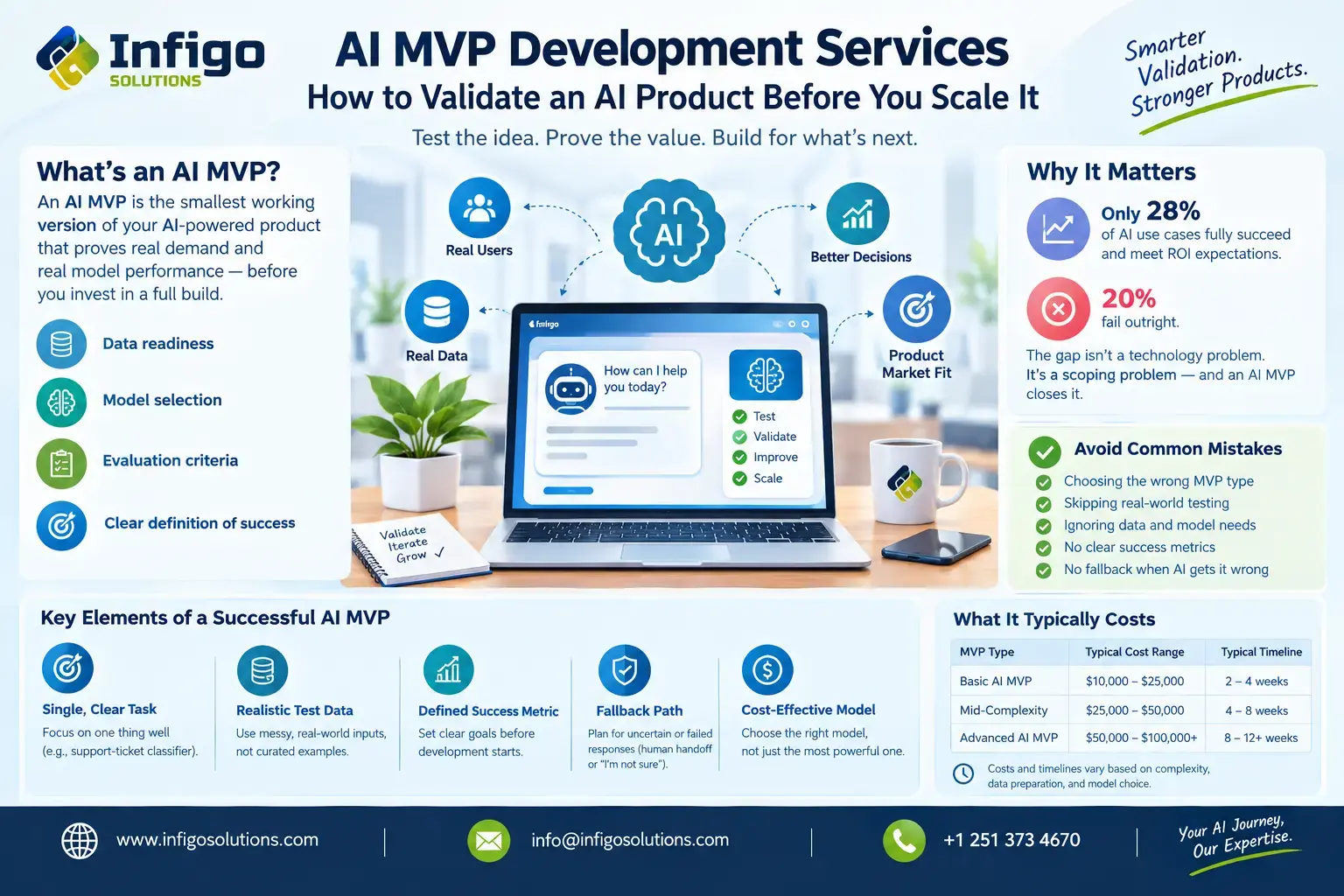

Comments
No comments yet. Be the first to comment!